
Employment Verification
Service Description
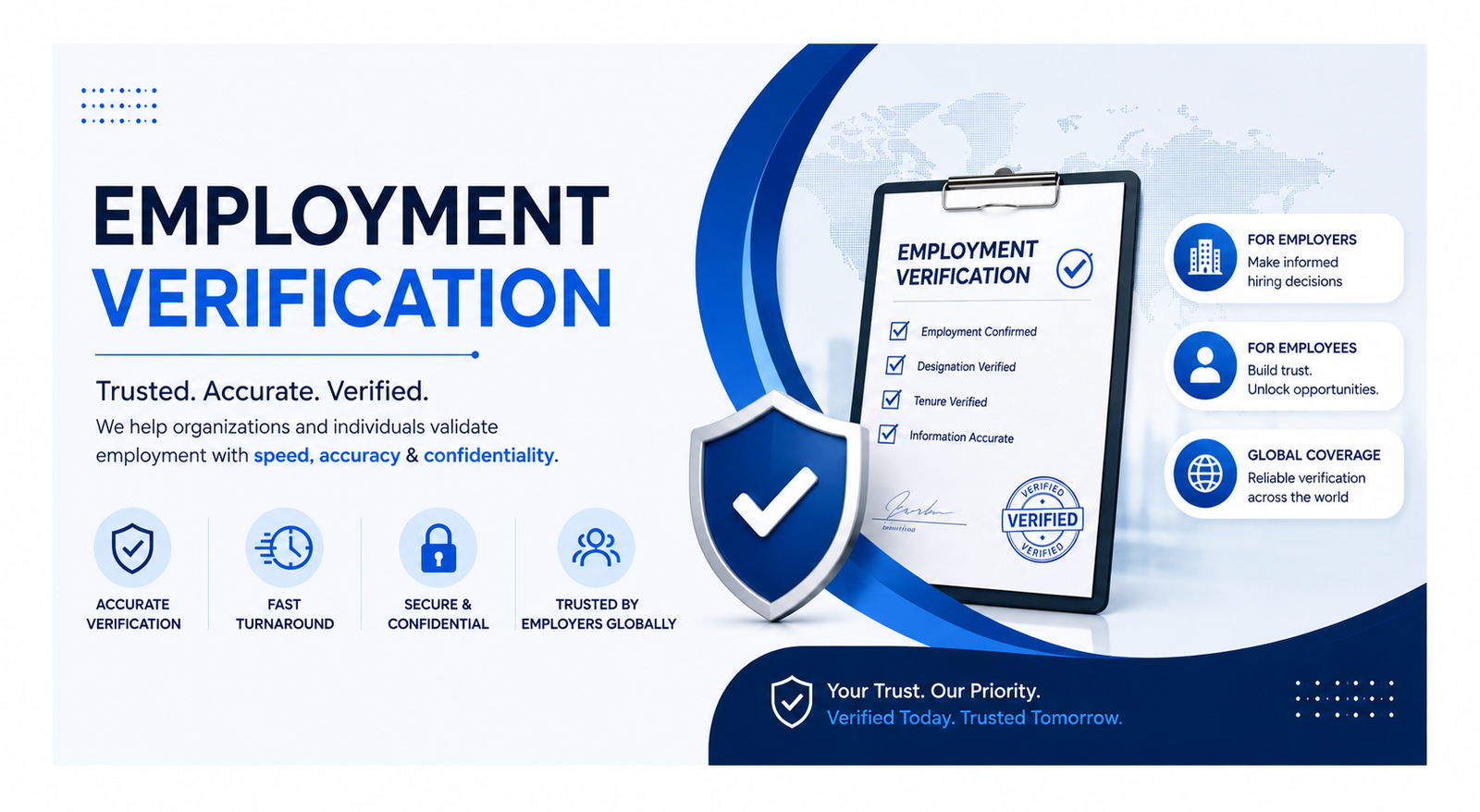
Employment Verification is a formal process used to confirm a candidate’s past or current job details with previous employers. It typically includes verifying job title, duration of employment, salary, and reason for leaving. This step ensures the accuracy of a candidate's resume and builds trust during hiring. Employers or background check agencies usually conduct it before finalizing a job offer. Employment Verification is crucial for maintaining hiring integrity and compliance.
The process helps employers validate important information provided by candidates during recruitment. Verification may involve contacting previous employers through official HR departments or authorized representatives. Depending on company policies, the information shared may vary based on applicable laws and organizational guidelines. Accurate employment records can help reduce the risk of discrepancies during background screening. Candidates should ensure that the employment information on their resumes and applications is consistent with official records. Proper documentation such as experience letters, relieving letters, or employment certificates may support the verification process. Employment Verification can be particularly important for senior, sensitive, or specialized positions. A smooth verification process can help employers make more informed hiring decisions. It also promotes transparency and professionalism between candidates and organizations. Overall, Employment Verification supports a reliable recruitment process by helping confirm employment history and maintain confidence in candidate information.
Subscribe to Our Newsletter!

Employment Hunt is a trusted online job portal designed to connect job seekers with the right employment opportunities and employers with skilled talent. We make job searching simple, fast, and convenient by providing opportunities across different industries, locations, experience levels, and salary ranges.